
Why the Laziest Investor Often Wins the Most
There is a ritual that plays out millions of times every day. A phone buzzes. A thumb swipes. An app opens. A portfolio appears. The numbers are green or red. The owner feels a flicker of something. Pleasure if green. Disappointment if red. The app closes. The ritual repeats an hour later. It repeats again before bed. It feels like monitoring. It feels like diligence. It is neither.
I have spent two decades watching how behavior affects returns. The pattern is consistent. The people who check their portfolios most often trade most often. The people who trade most often earn the least. The correlation is not subtle. It is brutal. And it is driven by something most investors never examine: their own brain chemistry.
The mechanism is dopamine. It is the neurotransmitter that drives reward-seeking behavior. It spikes when you anticipate a reward. It spikes when you get one. It also spikes unpredictably, which is why gambling is addictive. The variable reward is more powerful than the guaranteed one. The stock market is a variable reward machine. You check. Sometimes it is up. Sometimes it is down. The unpredictability keeps you checking.
I first understood this when I worked with a behavioral psychologist years ago. He showed me studies of rats pressing levers. The rats pressed more when the reward was random. They could not stop. The same wiring exists in humans. The same wiring exists in investors. The phone is the lever. The price move is the reward. The checking never stops because the brain cannot tell the difference between investing and gambling.
The data on trading frequency is damning. A famous study of retail investors found that the most active traders underperformed the market by six percent annually. They also underperformed the least active traders by a wide margin. The more they traded, the worse they did. The ones who traded least did best. The lazy investors won.
I have watched this play out in real accounts. A friend who day traded during the pandemic made money at first. He showed me screenshots. He felt invincible. A year later, his account was down forty percent. The taxes and commissions had eaten the gains. The bad trades had eaten the rest. He had been active the whole time. He had felt engaged. He had also lost.
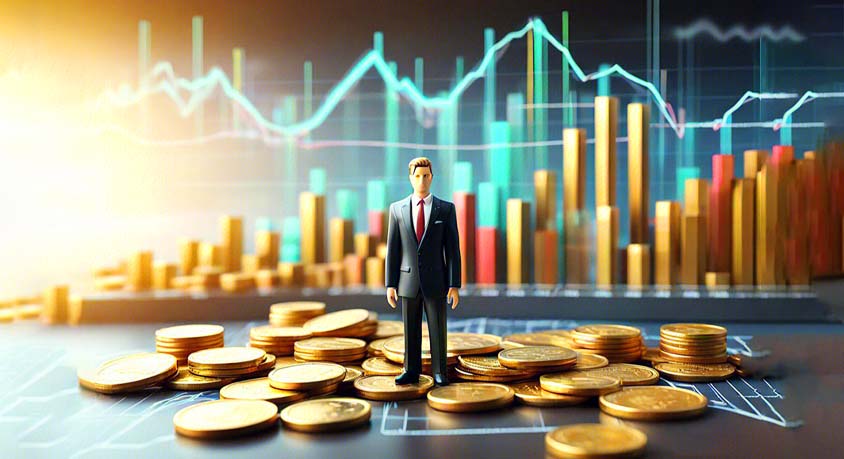
The psychological trap is that trading feels productive. It feels like doing something. Sitting still feels like doing nothing. The brain prefers action to inaction, even when action is harmful. The investor who holds through a downturn feels anxious. The investor who sells feels relief, even if selling was the wrong move. The relief reinforces the behavior. The cycle continues.
There is a concept called myopic loss aversion. It means you feel losses more than gains, and checking frequently makes you feel more losses. A portfolio that goes up over time has many small down days along the way. If you check every day, you feel those down days. If you check once a year, you only see the up. The frequent checker experiences more pain. The pain leads to bad decisions.
I have learned to set rules for myself. I check my portfolio once a month. I rebalance once a year. I do not have trading apps on my phone. The friction of logging in on a computer makes me think before I act. The thinking saves me from myself. The system is designed to account for my wiring, not to fight it.
The practical takeaway for most investors is simple but hard to execute. Stop checking. Delete the apps. Set a schedule and stick to it. The market will be there tomorrow. It will be there next week. The price movements you miss by not checking are noise. The signal is long term. The signal does not change by the hour.
I have seen people transform their results by changing this one behavior. A friend who used to check daily switched to quarterly. He stopped trading. He started buying index funds automatically. His returns improved. His stress decreased. His life got better. The only thing he changed was the frequency of his attention.
The research backs this up. A study of investors in Norway found that those who logged in less often earned higher returns. The relationship was linear. Fewer logins meant more money. The screen was not just distracting. It was destructive. Every glance cost something.
The irony is that the market rewards neglect. The most successful investors are often the most bored. They set a plan and ignore it. They let compounding work. They do not check to see if it is working today because they know it works over decades. The daily fluctuations are irrelevant. The only thing that matters is staying in the game.
I am not suggesting complete disengagement. You need to know if your strategy is working over time. You need to adjust for life changes. But checking daily is not monitoring. It is feeding an addiction. The addiction costs money. It costs peace of mind. It costs nothing good.
The solution is not willpower. Willpower fails when dopamine calls. The solution is removing the trigger. Delete the apps. Turn off notifications. Make it hard to check. The harder it is, the less you will do it. The less you do it, the better your decisions. The better your decisions, the higher your returns.
The phone screen is not just a screen. It is a portal to your own psychology. Every time you open it, you are playing a game designed by evolution to keep you engaged. The game does not care about your returns. It cares about your attention. Your attention is the product. Your returns are the cost.
The lazy investor is not lazy. They are disciplined. They have learned that doing nothing is often the best thing to do. They have mastered the art of ignoring the noise. They sit still while others chase. They win because they do not try to win. They just let time work.
MORE FROM WIRED
- I found a way to double your money instantly, but most employees are too distracted to notice.
- Everyone claims cash is a safe haven right now, but I beg to differ.
- The deepest pitfall I ever stumbled into was that "principal-protected" structured product.
- Apr,11,2026
- I advise you not to mistake a "Yield Trap" for a "Safe Haven" just because the brochure is glossy
- Apr,09,2026
- I looked at the cash reserves of the world’s biggest companies and it made me want to hide under my desk
- Apr,07,2026
- Don’t Be an “Expensive Sucker” in Personal Finance: The “Net-Zero Survival Checklist” You Need to Master
- Apr,05,2026
- I Spent 5 Years Testing Active Funds. The Winner Wasn’t a Person.
- Apr,03,2026