
The Next Bet: Making the Blind See, and the Rest of Us Transparent?
There is a peculiar intimacy in watching someone control a computer cursor simply by thinking. The screen doesn't flicker, the hands don't move, yet the little arrow glides across the display with intention, stopping precisely where its operator wants it to go. For Noland Arbaugh, the first recipient of a Neuralink brain implant, this is not a magic trick but a daily reality. Two years after his surgery, he is among twenty-one individuals with paralysis who now browse the web, play video games, and even create digital art using only the electrical activity of their neurons . This is the quiet revolution happening beneath the headlines: the gradual, systematic translation of human thought into machine-readable command. And in 2026, that revolution is preparing to leap from restoring lost function to augmenting normal capacity, fundamentally altering what it means to see, to interact, and perhaps, to be private.
The most dramatic frontier is vision. Neuralink has announced that its "Blindsight" implant is ready for first human trials, pending regulatory approval . The device bypasses damaged eyes and optic nerves entirely. A small camera mounted on glasses captures visual information, processes it into neural signals, and transmits those signals directly to the brain's visual cortex . Elon Musk has been characteristically candid about the initial limitations: early recipients will experience the world at low resolution, something akin to classic video game graphics . But over time, with machine learning refinement, they may distinguish objects, navigate spaces, and eventually, perhaps, see with resolution exceeding natural human vision . For the approximately 40 million blind individuals worldwide, this represents hope of a kind previously confined to science fiction. The technology treats the brain not as a mysterious black box, but as a readable, writable medium—a biological hard drive that can accept new sensory input if you know the correct file format.
Parallel to this invasive frontier runs a subtler, non-invasive current. At CES 2026 in Las Vegas, Meta demonstrated the expanding applications of its neural wristband, a device that uses surface electromyography to detect electrical signals from wrist muscles . Wearers can scroll, swipe, and select simply by thinking about moving their fingers, even if their hands cannot actually move. The company partnered with Garmin to explore automotive controls—navigating maps and playing games without touching a screen—and with the University of Utah to develop assistive applications for individuals with ALS and muscular dystrophy . The band is sensitive enough to detect residual muscle activity in people who cannot move their hands, translating intention into action . It is electromyography, not telepathy, but the user experience increasingly blurs that distinction.
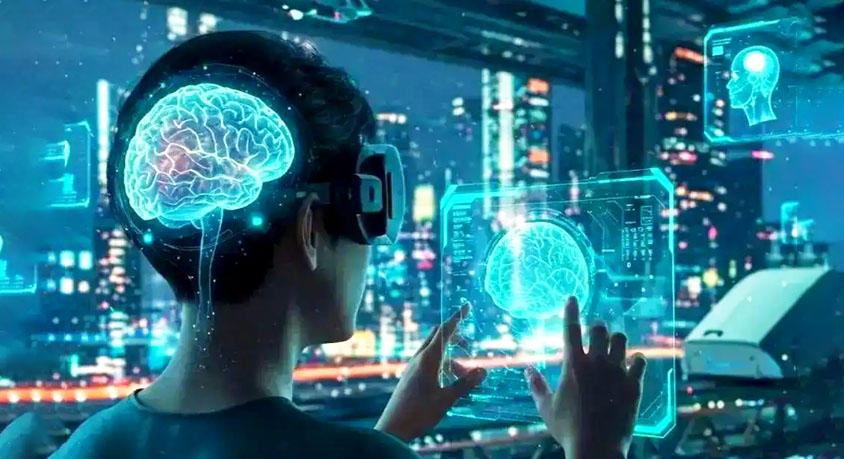
These two trajectories—invasive and non-invasive, restorative and augmentative—rest on the same fundamental insight: the brain is an electrochemical machine, and machines can talk to machines. The global brain-computer interface market, valued at $240.6 million in 2025, is projected to reach $960.8 million by 2034, growing at nearly 16 percent annually . North America leads this expansion, driven by concentrated neuroscience research, favorable regulatory pathways, and a culture increasingly receptive to human enhancement . The question is no longer whether we can build these interfaces, but what happens when they become ubiquitous.
The privacy implications are vertiginous. Neural data is not just another data stream; it is the biological substrate of identity itself. Breaches could expose not passwords or purchase histories, but memories, emotions, subconscious biases, and even the content of inner speech . Researchers distinguish between "weak BCI-based mind reading," which decodes limited mental states with user cooperation, and "strong BCI-based mind reading," which could bypass conscious control entirely . The latter remains technically challenging—current systems cannot reliably decode inner thoughts—but the trajectory is unmistakable . As AI becomes more sophisticated at interpreting neural signals, the boundary between "what I intended" and "what the algorithm inferred" grows dangerously thin.
Consider the scenario where neural data becomes commercialized. Your thoughts about a product, detected while browsing, could inform real-time ad targeting. Your emotional responses to political messages could be measured and manipulated. Your medical insurer might one day ask for access to your neural activity patterns as a condition of coverage. These are not paranoid fantasies; they are logical extensions of existing data markets applied to the most intimate domain imaginable. The World Economic Forum has warned that without safeguards, compromised brain connections could lead to mental manipulation, illicit data exfiltration, and even physical injury through altered motor control.
There is also a more subtle ethical tension: the gap between therapeutic promise and enhancement desire. Restoring vision to the blind is an unqualified good. But once the technology exists, who decides where to draw the line? Musk has explicitly stated that Blindsight's long-term goal is to exceed natural human vision . If you can augment sight, why not memory, attention, or emotional regulation? The same Neuralink platform that helps paralyzed patients communicate could, with different software, offer healthy individuals the ability to upload skills directly to their brains or communicate telepathically with machines . This is the classic dilemma of enabling technology: it is indifferent to application.
What makes the American context particularly charged is the convergence of two cultural currents: a deep respect for medical innovation that restores function, and an equally deep enthusiasm for self-enhancement. The same society that celebrates breakthroughs for disabled veterans eagerly adopts nootropics, biohacking, and performance optimization. Brain-computer interfaces sit precisely at this intersection. They can be framed as medical devices for the severely impaired, or as the next logical step in human augmentation. Both framings are accurate, and both will drive adoption.
The regulatory architecture is struggling to keep pace. The FDA has granted Blindsight "Breakthrough Device Designation," accelerating its path to market . Neuralink plans to move from limited human trials to high-volume production in 2026, with an almost entirely automated surgical procedure. Meanwhile, privacy frameworks designed for conventional data are ill-equipped for neural information. Existing health privacy laws may not cover neural data collected by consumer devices, and enforcement mechanisms lag behind technological capability. Cybersecurity experts warn of "neuro-phishing," where adversaries use neurological data for cognitive manipulation, and of supply-chain vulnerabilities in implantable hardware .
Standing at this threshold, we might ask a different kind of question. Not "can we do this?"—clearly we can. Not even "should we do this?"—the benefits for those with paralysis or blindness are too compelling to deny. The harder question is: what kind of relationship do we want with our own minds? For all of human history, thought has been the one domain of absolute privacy. You could lie about your intentions, conceal your feelings, keep secrets even under torture, because no one could directly access the contents of your consciousness. That wall is now developing cracks. The same technology that lets a blind person see also lets a machine read the neural signatures of your attention, your preference, your intent. Whether we treat that as liberation or intrusion will depend on the boundaries we draw now, before the technology becomes invisible by virtue of its ubiquity. The ghost is not just leaving the machine; the machine is entering the ghost.
MORE FROM WIRED
- It's no longer just the "it" that can chat: Artificial intelligence has finally grown hands and feet!
- Jurassic Park Warning? Scientists Just Made an Extinct 'Ghost' Open Its Eyes
- They Decided to Build a Nuclear Reactor in Their Own Backyard to Feed AI
- Apr,10,2026
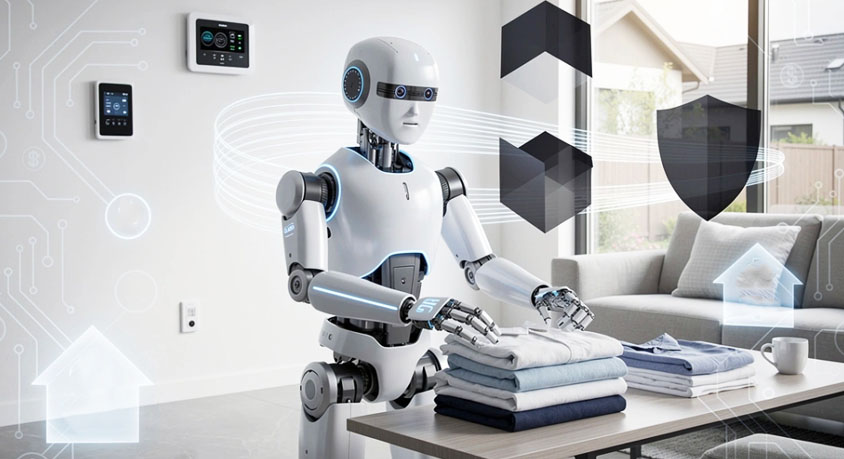
- Your first household robot is finally coming!
- Apr,08,2026
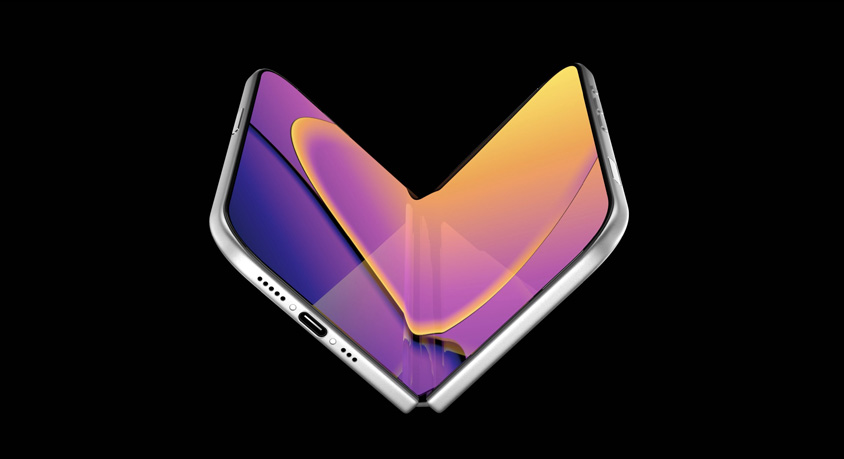
- Apple's Crease Battle: Can This $2,000 Phone Save a Dull Era?
- Apr,06,2026
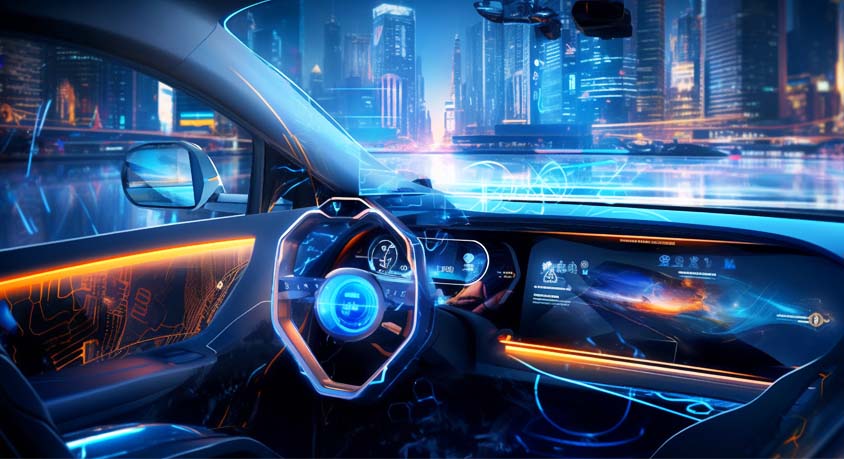
- "Eye Contact" in Autonomous Driving—When AI Cars Learn Human Intuition
- Apr,04,2026
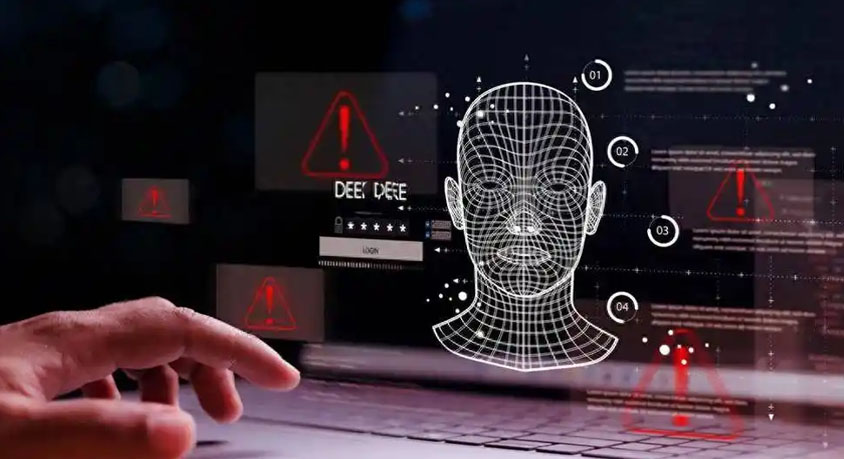
- The Deepfake Called Me "Dad." I Almost Sent $50,000.
- Apr,02,2026