
They Decided to Build a Nuclear Reactor in Their Own Backyard to Feed AI
There is a peculiar irony in watching a disembodied intelligence develop a terrestrial appetite. For years, we thought of artificial intelligence as ethereal—a ghost in the machine, a cloud-based consciousness that existed nowhere and everywhere simultaneously. We imagined it living in server racks somewhere, sipping electricity politely while composing poetry and solving differential equations. That image has become a dangerous fiction. The large language models that now mediate everything from our search queries to our medical advice are, in physical terms, among the most energy-intensive creations in human history. A single query to an AI model consumes three to ten times the electricity of a traditional Google search. When multiplied by billions of interactions, this delta becomes a thermodynamic monster. The International Energy Agency projects that data centers will consume more than 1,000 terawatt-hours of electricity in 2026—more than double their 2022 consumption, equivalent to the entire annual demand of Japan. And so we arrive at a curious historical moment: the companies that built the ethereal intelligence are now scrambling to build nuclear reactors.
Training a frontier model requires thousands of GPUs running at full capacity for months. Once deployed, those models serve billions of inferences, each one demanding the same computational intensity as the training itself. Traditional data centers operated at power densities of five to ten kilowatts per rack. AI data centers routinely exceed forty kilowatts per rack, with liquid-cooled configurations pushing past one hundred. This is not a marginal increase; it is a phase change. And it arrives just as the American grid is least prepared to accommodate it. Transmission lines are aging, transformer delivery times have stretched to 127 weeks, and the queues for new grid connections in states like Virginia now stretch four years or more.
Faced with this bottleneck, the tech giants have concluded that waiting for the grid is not a strategy. In September 2025, Microsoft signed a twenty-year power purchase agreement to restart the shuttered Three Mile Island Unit 1, buying its entire output to supply data centers in the mid-Atlantic region. Three Mile Island—the very name evokes the 1979 partial meltdown that froze American nuclear construction for a generation—will return to service by 2028, its clean energy destined not for homes but for servers answering queries about restaurant recommendations and term paper outlines. In October, Google announced a partnership with Kairos Power to develop a fleet of small modular reactors, aiming to bring the first online by 2030. Amazon followed two days later with a suite of investments: a collaboration with Dominion Energy to explore SMR deployment at Virginia's North Anna nuclear station, and a $500 million funding round for X-energy, a reactor developer, to build four units in Washington State. Combined, these announcements could deliver more than 5,000 megawatts of new nuclear capacity by the late 2030s—enough to power several million homes, all flowing into data centers.
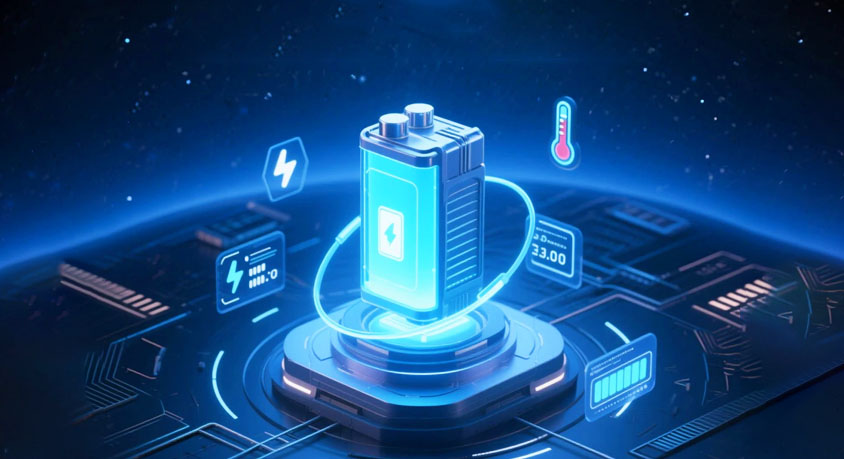
This convergence has a name: behind-the-meter generation. By colocating reactors with data centers, tech companies can bypass the grid entirely, avoiding transmission bottlenecks and queue delays while securing round-the-clock carbon-free power. The strategy aligns with their climate commitments—Google's emissions are 48 percent higher than 2019 levels due to data center demand, and Microsoft is struggling to meet its 2030 net-zero pledge—while insulating them from grid volatility. For the nuclear industry, these customers represent something unprecedented: buyers willing to pay a premium for reliability and carbon attributes, providing the revenue certainty needed to break the cycle of cost overruns and cancellations that has plagued American nuclear construction for decades.
The technology enabling this shift is the small modular reactor, or SMR. Unlike the gigawatt-scale behemoths of the twentieth century, SMRs are designed to generate 50 to 300 megawatts—roughly one-third the output of a traditional reactor—with components fabricated in factories and assembled on site. Proponents argue that modular construction will slash costs and construction times, transforming nuclear from a mega-project gamble into a scalable industrial product. In early March 2026, Bill Gates's TerraPower received the first U.S. construction approval for a commercial SMR in a decade, clearing the way for its Natrium reactor in Wyoming, with operations targeted for 2030. South Korea's i-SMR program, a 170-megawatt design, submitted its standard design approval application in February, aiming for commercial operation by the early 2030s.
But skepticism remains warranted. The term "small modular reactor" conceals more than it reveals, encompassing dozens of designs at wildly varying stages of maturity, from light-water reactors not fundamentally different from existing fleets to exotic fast reactors using liquid sodium coolant. No SMR has yet delivered commercial power to the U.S. grid, and the few with construction underway, like the GE-Hitachi BWRX-300 in Canada, face estimated costs exceeding $15,000 per kilowatt—hardly the dramatic reduction advocates promised. Critics argue that the heterogeneity of designs undermines the modular learning effects that might drive costs down; achieving competitiveness with large reactors would require deploying hundreds of identical units, a trajectory with little historical precedent. Even the most optimistic timelines place meaningful SMR capacity in the early 2030s, leaving a multi-year gap during which data centers must rely on natural gas, grid upgrades, or demand rationing.
The deeper question is not whether these reactors will work—engineering challenges are solvable with sufficient resources—but what their construction signifies about our relationship with energy. For decades, nuclear power was framed as a public good, a national infrastructure project requiring democratic legitimacy and broad social consensus. The new model inverts this logic. These reactors are private infrastructure, built by and for corporations, serving corporate objectives, connected to grids only incidentally if at all. When Microsoft buys the output of Three Mile Island, the electricity does not flow into the Pennsylvania grid to stabilize prices or reduce emissions for residents; it flows into servers answering queries from around the world. The local community bears the risk—the spent fuel stored on site, the emergency planning zone, the industrial traffic—while the benefits accrue to shareholders and remote users. Unsurprisingly, local opposition persists; the town supervisor near Three Mile Island notes that most residents want the plant to remain closed, receiving none of the power it generates while carrying all of its legacy.
MORE FROM WIRED
- It's no longer just the "it" that can chat: Artificial intelligence has finally grown hands and feet!

- Jurassic Park Warning? Scientists Just Made an Extinct 'Ghost' Open Its Eyes

- The Next Bet: Making the Blind See, and the Rest of Us Transparent?
- Apr,12,2026

- Your first household robot is finally coming!
- Apr,08,2026

- Apple's Crease Battle: Can This $2,000 Phone Save a Dull Era?
- Apr,06,2026

- "Eye Contact" in Autonomous Driving—When AI Cars Learn Human Intuition
- Apr,04,2026

- The Deepfake Called Me "Dad." I Almost Sent $50,000.
- Apr,02,2026