
Apple's Crease Battle: Can This $2,000 Phone Save a Dull Era?
There is a moment in the lifecycle of any mature technology when refinement replaces revolution. The annual upgrades become incremental, the keynote applause grows polite rather than ecstatic, and consumers begin asking whether the device in their pocket has finally become good enough. For the smartphone, that moment arrived roughly five years ago. Since then, we have witnessed faster processors, better cameras, and slightly longer battery life—all welcome improvements, none fundamentally changing the relationship between human and device. The rectangle in your pocket has remained a rectangle, unchallenged in its dominance, unaltered in its basic grammar. That stasis is about to be disrupted, not by a new category, but by an old category finally executed with Apple's particular blend of engineering patience and market timing.
By the end of 2026, if the supply chain chatter and analyst consensus prove accurate, Apple will ship its first foldable iPhone. The device, expected to carry a price tag between $2,000 and $2,500, represents both a response to market pressure and a bet on the future of personal computing. For a company that has historically waited for technologies to mature before entering, the timing is revealing: the global foldable market is projected to shift decisively toward book-style devices this year, with large-screen foldables expected to capture 65 percent of shipments. Consumers are signaling that they want their phones to become tablets, even if they are not entirely sure why.
The engineering challenge Apple has set for itself is captured in a single word: crease. Every foldable phone on the market bears a visible line where the display bends, a physical scar from the act of folding glass. Users have learned to tolerate it, manufacturers have learned to minimize it, but no one has eliminated it. Apple is reportedly attempting to do just that through a combination of technologies: an advanced hinge using liquid metal components, a custom-designed metal stress distribution plate, and next-generation ultra-thin flexible glass with variable thickness. The approach is characteristically Apple—rather than accepting the compromises of existing solutions, they have spent years developing a system that bends the display without leaving evidence of the bend. If successful, the iPhone Fold would offer the first truly crease-free folding experience, a distinction that matters not merely for aesthetics but for the fundamental illusion the device must sustain: that a folded phone and an unfolded tablet are the same object, continuous and unbroken.
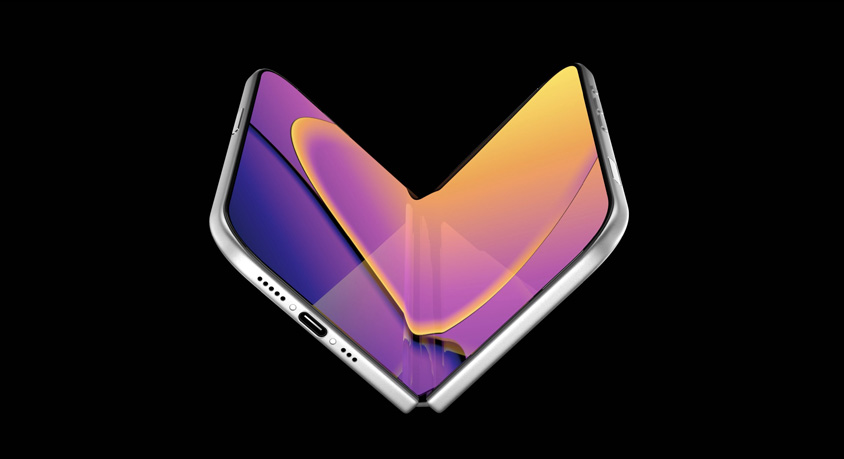
The internal specifications paint a picture of a device designed to disappear into its function. A 5.5-inch OLED cover display for one-handed use expands to a 7.8-inch interior screen roughly the size of an iPad mini when opened. At 4.8 millimeters thick when unfolded, it would be thinner than any current iPhone, almost impossibly slender for a device containing two displays, a hinge mechanism, and what is rumored to be the largest battery ever fitted to an iPhone. The processor will match the flagship A20 series, the modem will be Apple's second-generation in-house design, and Face ID may give way to a Touch ID power button to preserve internal space. These are not revolutionary features individually, but together they constitute an argument: the future of the phone is not a phone at all, but a device that becomes whatever size you need at the moment you need it.
This argument rests on a specific theory of human behavior. We carry phones because they fit in pockets and hands. We use tablets because they display more information and enable different kinds of interaction. The foldable collapses these two use cases into one object, eliminating the choice between portability and capability. For reading documents, watching video, or working with multiple apps simultaneously, the unfolded screen offers genuine utility. For messaging, navigation, and quick checks, the folded device reverts to familiar phone dimensions. The question is whether this convergence addresses a real need or merely solves a problem nobody had. Samsung and others have sold millions of foldables, suggesting demand exists, but the category remains a niche within a niche, appealing primarily to early adopters willing to accept compromise for novelty.
The deeper question, and the one that makes this launch more significant than a simple product refresh, concerns what comes after. There is a growing consensus among technology strategists that the smartphone's dominance is approaching its natural terminus. Meta's Mark Zuckerberg has declared internally that AI-powered smart glasses will become as essential as phones, enabling users to access information by looking rather than touching. Google and OpenAI are reportedly developing wearable devices designed to offload functions from the handheld rectangle. The logic is compelling: if information can be projected onto your field of view and interactions handled through voice and gesture, the physical screen becomes redundant. We are, in this telling, approaching the last generation of devices that require us to look down.
Seen from this perspective, the foldable iPhone represents not the future but the final perfect expression of the past. It is the smartphone optimized to its logical extreme—a device that can be phone, tablet, and perhaps even laptop when paired with a keyboard. It extends the lifespan of the category by making it more versatile, more adaptable, more capable of deferring the moment when we finally look up. Apple's rumored work on augmented reality glasses suggests the company understands this trajectory; the foldable buys time while the underlying technologies of display, battery, and AI converge on a wearable form factor that might actually work.
The price, then, is not merely a reflection of component costs but a statement about positioning. At two thousand dollars or more, the iPhone Fold will not be a mass-market device. It will be a halo product, a demonstration of what is possible, a lure for the most committed users and a signal to developers that the foldable form factor deserves their attention. If it succeeds technically—if the crease truly disappears, if the software adapts seamlessly, if the hinge survives years of use—it will establish a beachhead. If it fails, it will join the Newton and the HomePod as evidence that even Apple cannot force a category into existence.
What makes this moment worth watching is not the device itself but the transition it inhabits. We are standing at the intersection of two curves: one tracing the mature smartphone's slow decline into incrementalism, another tracing the emergence of wearable computing's exponential improvement. The foldable iPhone sits precisely at that intersection, a device that looks forward to a world without screens while perfecting the world with them. It may be the last great phone. Or it may be the first step toward something else entirely. Either way, by the end of 2026, we will have a much clearer sense of which direction the future actually lies.
MORE FROM WIRED
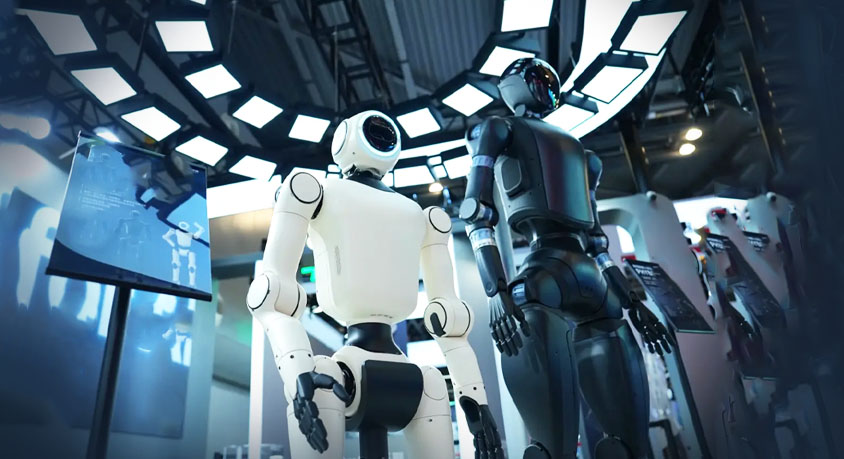
- It's no longer just the "it" that can chat: Artificial intelligence has finally grown hands and feet!

- Jurassic Park Warning? Scientists Just Made an Extinct 'Ghost' Open Its Eyes

- The Next Bet: Making the Blind See, and the Rest of Us Transparent?
- Apr,12,2026

- They Decided to Build a Nuclear Reactor in Their Own Backyard to Feed AI
- Apr,10,2026

- Your first household robot is finally coming!
- Apr,08,2026

- "Eye Contact" in Autonomous Driving—When AI Cars Learn Human Intuition
- Apr,04,2026

- The Deepfake Called Me "Dad." I Almost Sent $50,000.
- Apr,02,2026