
The Deepfake Called Me "Dad." I Almost Sent $50,000.
There is a particular quality to a mother's voice that no algorithm should be able to replicate. The cadence, the warmth, the way she says your name—these are not merely acoustic signals but emotional signatures, built over decades of shared life. When the phone rang for a 90-year-old woman recently, the voice on the other end was unmistakably her grandson's. He was in trouble, he said. He needed money immediately. She listened, she worried, and for many months afterward, she refused to answer the phone unless someone sat beside her. The call was a deepfake, generated by artificial intelligence that had learned to clone her grandson's voice from publicly available samples. The technology that can write poetry and generate photorealistic images has learned to do something far more intimate: it has learned to sound exactly like the people you love.
Welcome to 2026, the year we can no longer trust our own senses. A survey released this month found that one in four Americans has received an AI deepfake voice call in the past twelve months. Another twenty-four percent are not sure they could tell the difference. When asked who is winning the fight between mobile carriers and scammers, Americans chose the scammers by nearly two to one. The phone, once a lifeline to family and friends, has become a vector for synthetic deception. And the technology is improving faster than our ability to detect it.
The scale of the problem is staggering. Americans over sixty lost more than $3.4 billion to various scams in the most recent reporting cycle, an eleven percent increase from the previous year. Romance scams alone account for hundreds of millions in losses, with the average victim losing approximately $34,000. These are not unsophisticated criminals working from call centers. They are organized networks using generative AI to create deepfake videos and voice clones so convincing that a video call no longer proves anything. The person on the screen, blinking and smiling and speaking in real time, may be a synthetic construct with no physical existence.
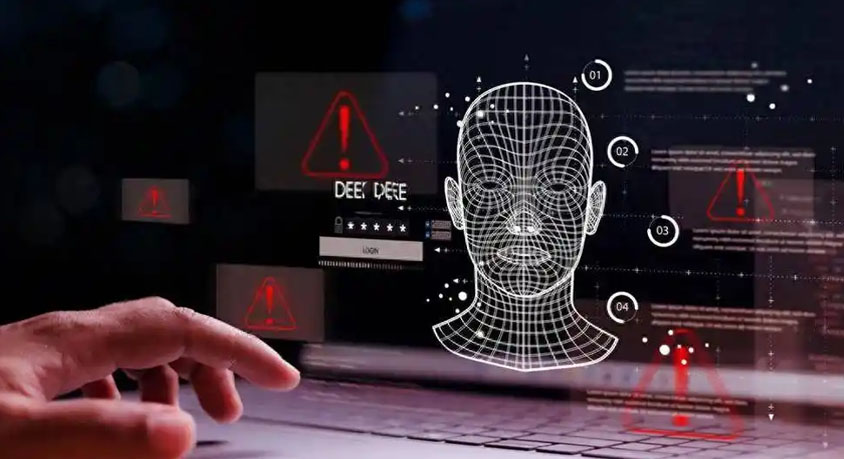
This is the context in which the United States is finally, belatedly, moving toward a national approach to digital identity. In January, bipartisan legislation was introduced to establish grant programs helping states modernize identity systems and protect against AI-driven deepfakes. The Stop Identity Fraud and Identity Theft Act responds to a simple, terrifying reality: the Government Accountability Office estimates that federal programs could lose between $233 billion and $521 billion annually to fraud, much of it tied directly to compromised identities. During the pandemic alone, identity-based fraud in unemployment programs was estimated between $100 billion and $135 billion. More than seventy percent of suspicious activity reports filed by banks now involve identity fraud, representing hundreds of billions in transactions.
The legislation is carefully framed to avoid the privacy pitfalls that have doomed previous efforts. It does not mandate digital identification, does not eliminate physical credentials, and does not require any individual to obtain or use a digital driver's license. Participation remains voluntary for states and individuals. The goal is not a centralized federal database but a toolkit—resources that states can use to build systems resilient enough to withstand AI-powered attacks.
But legislation moves slowly, and the fraudsters move fast. While Congress deliberates, millions of Americans need practical strategies for navigating a world where seeing is no longer believing. The first line of defense is a shift in mindset: we must abandon the assumption that audiovisual evidence proves identity. That video call from a distressed relative? It requires a verification step that does not rely on the same channel. A pre-agreed family code word, a callback to a known phone number, a question only the real person could answer. The romance scam warnings now include a specific test: ask the person to perform an unscripted action during a live video chat, like holding up three fingers or turning their head slowly. These small gestures can disrupt real-time deepfake filters that haven't learned to simulate arbitrary movements.
The second line of defense is technological. The same AI that enables deepfakes is also being deployed to stop them. Advanced identity verification platforms now combine document checks with "liveness detection"—algorithms that analyze subtle cues like skin texture, natural reflectivity, and involuntary micro-movements to confirm that a face is physically present rather than a synthetic video stream. Passive liveness detection, which runs invisibly in the background during a selfie capture, has become the new standard for balancing security with user experience. In one banking implementation, moving to passive liveness improved onboarding completion rates by thirty-five percent, reaching ninety-five percent success while blocking sophisticated spoofing attempts.
The third line of defense is regulatory pressure. Seventy-two percent of consumers now support stronger government regulations to force action from mobile carriers. Sixty-seven percent believe carriers should bear some responsibility for scam losses originating on their networks, and fifty-five percent want zero-liability fraud protection comparable to credit card companies. These numbers represent a political consensus in the making: the industry that enables these calls should help clean up the mess.
Yet beneath these practical measures lies a deeper question about the nature of identity itself. For most of human history, identity was physical—a face, a voice, a signature, a presence. The digital age abstracted identity into passwords and security questions, but those were always proxies for something more fundamental. Now even the fundamental markers are forgeable. Your voice can be cloned from thirty seconds of audio. Your face can be synthesized from a handful of photos. Your mannerisms can be learned and replicated by algorithms that have watched you on video calls.
The solution, paradoxically, is not to abandon technology but to embed it with something harder to fake: relationships. The reason the ninety-year-old woman finally refused to answer the phone is that she fell back on the oldest identity verification system known to humans: she stopped trusting strangers and insisted on presence. That instinct is not Luddism; it is wisdom. In a world where every signal can be simulated, the only remaining anchor is the chain of trust we build with people we actually know.
MORE FROM WIRED

- It's no longer just the "it" that can chat: Artificial intelligence has finally grown hands and feet!
- Jurassic Park Warning? Scientists Just Made an Extinct 'Ghost' Open Its Eyes
- The Next Bet: Making the Blind See, and the Rest of Us Transparent?
- Apr,12,2026
- They Decided to Build a Nuclear Reactor in Their Own Backyard to Feed AI
- Apr,10,2026

- Your first household robot is finally coming!
- Apr,08,2026
- Apple's Crease Battle: Can This $2,000 Phone Save a Dull Era?
- Apr,06,2026

- "Eye Contact" in Autonomous Driving—When AI Cars Learn Human Intuition
- Apr,04,2026