
The 700-Mile EV is Here: Why Toyota's New "Miracle" Battery Just Made Every Tesla on the Road Obsolete
There is a particular anxiety that accompanies every long-distance journey in an electric vehicle. It has a name, coined by engineers and felt by drivers: range anxiety. It is the quiet calculation of miles remaining versus miles required, the scanning of maps for charging stations, the acceptance that a trip requiring six hours in a gasoline car will demand eight or nine in an EV, punctuated by forty-minute pauses while electrons trickle into batteries. This anxiety has been the single greatest barrier to mass adoption, more significant than price, more stubborn than charging infrastructure. And if a series of announcements from Japan and South Korea prove accurate, it is about to become a historical footnote.
In late 2025, Toyota unveiled its long-anticipated solid-state battery, promising a range of 745 miles on a single charge and a charging time of just ten minutes from ten to eighty percent. The numbers strain credibility. A current Tesla Model S, among the longest-range EVs available, offers just over 400 miles. A Porsche Taycan charges from ten to eighty percent in approximately eighteen minutes under ideal conditions. Toyota's claims represent not incremental improvement but a phase change—a doubling of range and halving of charging time simultaneously, a combination that redefines what an electric vehicle can be.
The technology behind these claims has been in development for over a decade, plagued by the same fundamental problem: solid electrolytes are brittle, prone to cracking, and difficult to manufacture at scale. Traditional lithium-ion batteries use liquid electrolytes to shuttle ions between anode and cathode. This liquid is flammable, degrades over time, and imposes limits on energy density. Solid-state batteries replace it with a ceramic or glass material that is non-flammable, more stable, and capable of accommodating higher-energy chemistries. Toyota's breakthrough, according to the company, lies in a novel sulfide-based electrolyte and a proprietary manufacturing process that can produce these cells at automotive scale.
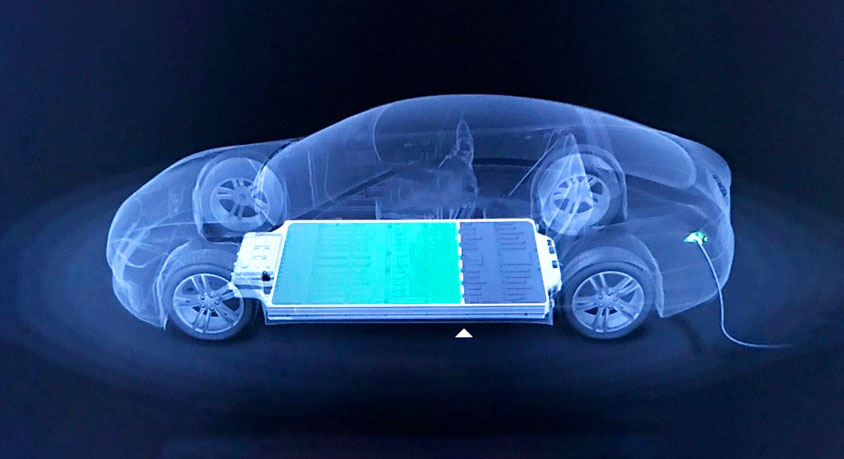
South Korea is not standing still. Samsung unveiled its own solid-state prototype in early 2026, claiming 600 miles of range and a nine-minute charging time, with pilot production slated for late 2027. LG Energy Solution announced a partnership with Hyundai to co-develop solid-state cells, aiming for commercialization by 2028. The pattern is unmistakable: Asian manufacturers, having dominated the lithium-ion supply chain for decades, are positioning to do the same for the next generation. And American automakers, having ceded battery manufacturing to Asia once, face the prospect of doing so again.
The implications for the existing EV landscape are stark. Tesla's advantage has never been battery chemistry; it has been battery integration and software. The company buys cells from suppliers and designs packs, motors, and control systems around them. But if Toyota or Samsung can offer a vehicle with 700 miles of range that charges in ten minutes, the calculus changes. Range ceases to be a differentiator. Charging speed ceases to be a differentiator. The competition shifts to everything else—price, design, reliability, service—domains where Toyota has decades of experience and Tesla has a more mixed record.
The deeper question is whether American manufacturers can respond. Ford and General Motors have announced solid-state partnerships, but their timelines stretch to 2030 or beyond. The Inflation Reduction Act's manufacturing incentives were designed to onshore battery production, but they apply to existing lithium-ion technology as much as next-generation cells. By the time American automakers have solid-state factories online, Toyota and Samsung may have been producing millions of cells for years, capturing the learning-curve cost reductions that determine which technologies become affordable and which remain premium curiosities.
There is also the infrastructure question. A vehicle that charges in ten minutes requires chargers capable of delivering that power. Current fast chargers operate at 350 kilowatts. A ten-minute charge for a 150-kilowatt-hour battery—the size needed for 700 miles—requires peak power approaching one megawatt. This is not a trivial upgrade. It demands grid connections that few locations possess, cables thick enough to handle the current, and cooling systems to manage heat. The technology exists, but deployment at scale will take years and billions in investment. The first owners of 700-mile EVs may find themselves unable to charge at the speeds their vehicles demand, trapped between capability and infrastructure.
The most honest assessment of where this technology stands comes from Toyota itself. The company has announced that its first solid-state vehicles will be limited-production models, priced at a premium, aimed at early adopters willing to pay for the privilege of owning the future. Mass production, at costs competitive with lithium-ion, is targeted for 2030. This is not a revolution that arrives overnight. It is a transition that unfolds over years, constrained by manufacturing scale, material supply chains, and the slow replacement of the global fleet.
Yet the direction is clear. The internal combustion engine's remaining advantage—range and refueling speed—is being systematically eliminated. When an EV can travel from New York to Chicago on a single charge, and recharge in the time it takes to use a restroom and buy coffee, the case for gasoline collapses. The only remaining question is who builds that EV, and where. Toyota's announcement suggests the answer may be Japan. The silence from Detroit suggests a nation waiting to buy its future from others.
MORE FROM WIRED
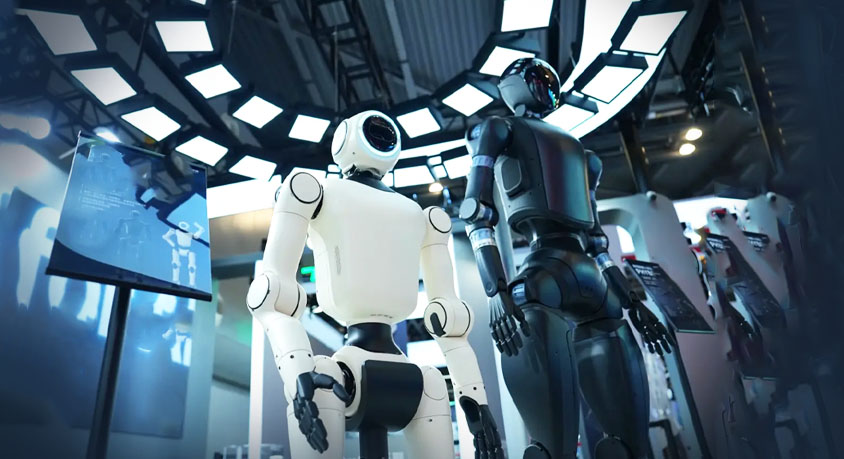
- It's no longer just the "it" that can chat: Artificial intelligence has finally grown hands and feet!

- Jurassic Park Warning? Scientists Just Made an Extinct 'Ghost' Open Its Eyes

- The Next Bet: Making the Blind See, and the Rest of Us Transparent?
- Apr,12,2026
- They Decided to Build a Nuclear Reactor in Their Own Backyard to Feed AI
- Apr,10,2026
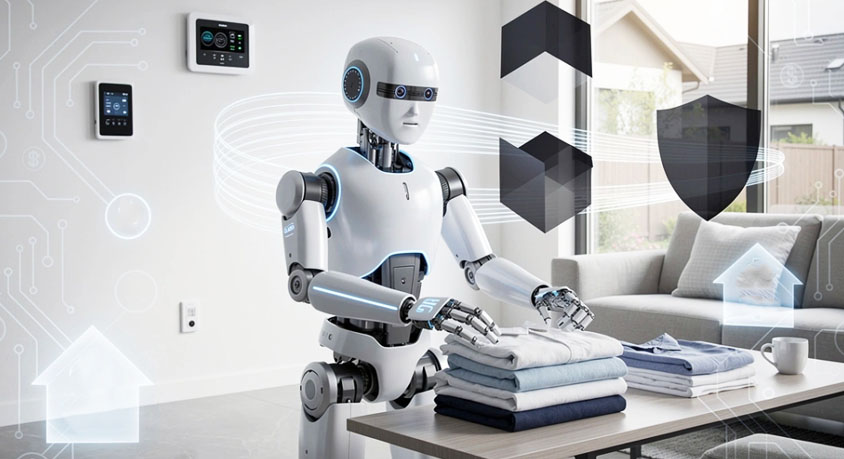
- Your first household robot is finally coming!
- Apr,08,2026
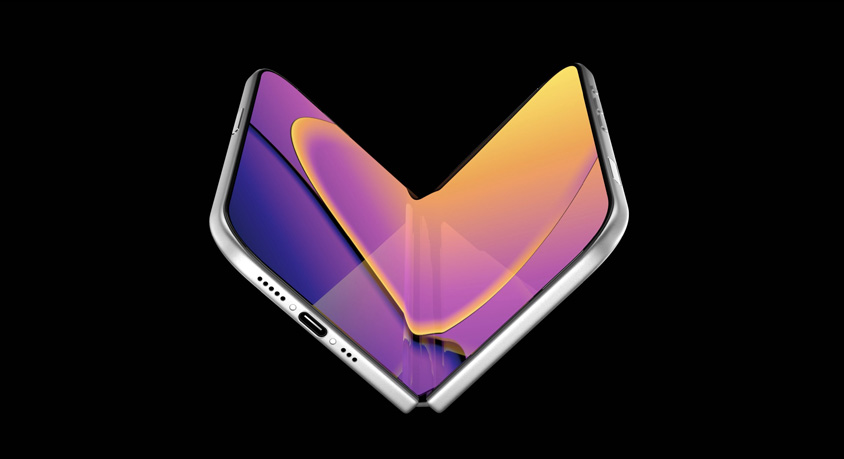
- Apple's Crease Battle: Can This $2,000 Phone Save a Dull Era?
- Apr,06,2026
- "Eye Contact" in Autonomous Driving—When AI Cars Learn Human Intuition
- Apr,04,2026