
This 100-Million Degree Breakthrough Means Your Electric Bill Could Soon Be Zero
There is a moment, usually around 8 p.m. on a winter evening, when you glance at the thermostat and perform a small calculation. The temperature outside is dropping, the furnace is running, and somewhere in the back of your mind, you know that the meter on the side of your house is spinning a little faster than it should. That spinning meter is connected to something vast: a grid powered by coal plants in Wyoming, natural gas turbines in Texas, hydroelectric dams in the Pacific Northwest, and a scattering of solar panels and wind turbines wherever geography permits. It is a system built over a century, fragile in its complexity, expensive in its operation, and entirely dependent on fuel that must be mined, shipped, and burned. Now imagine that meter never spins at all.
The path to that vision runs through a small town in southern France, where thirty-five nations have spent the past decade assembling what may be the most complicated machine ever built. ITER, the International Thermonuclear Experimental Reactor, is designed to do one thing: fuse atomic nuclei together and extract the energy released. The principle is simple, borrowed directly from the sun. Every star in the universe runs on fusion, crushing hydrogen into helium under immense gravity and temperature, releasing light and heat as byproducts. On Earth, we cannot replicate gravity, so we compensate with temperature. The goal is to heat hydrogen plasma to 150 million degrees Celsius—ten times hotter than the core of the sun—and hold it steady long enough for fusion to occur.
The reason this matters for your electric bill is written in the fuel. Fusion burns isotopes of hydrogen: deuterium, which can be extracted from seawater, and tritium, which can be bred from lithium. A single gram of this fuel contains energy equivalent to eleven tons of coal. A fusion power plant the size of a conventional coal facility could power a city of a million people on a few hundred pounds of fuel per year. There is no carbon dioxide, no long-lived radioactive waste, no risk of meltdown because the reaction stops the instant conditions falter. It is, in the language of engineers, the ultimate baseload power source: always available, infinitely scalable, environmentally inert.
The recent news that justifies renewed attention comes from multiple fronts. In February 2026, China's EAST reactor, the Experimental Advanced Superconducting Tokamak, sustained a plasma pulse at 100 million degrees Celsius for 1066 seconds—nearly eighteen minutes—shattering its previous record. This is not yet a power plant; it is a proof that the confinement physics works. In the United Kingdom, the JET facility achieved a record fusion energy output of 69 megajoules before its final shutdown, validating decades of research that now feeds into the STEP program aiming for a prototype plant by 2040. And at ITER, after years of delays and budget overruns that pushed total costs past $20 billion, the first plasma is now scheduled for 2033, with full deuterium-tritium fusion experiments beginning in 2039.
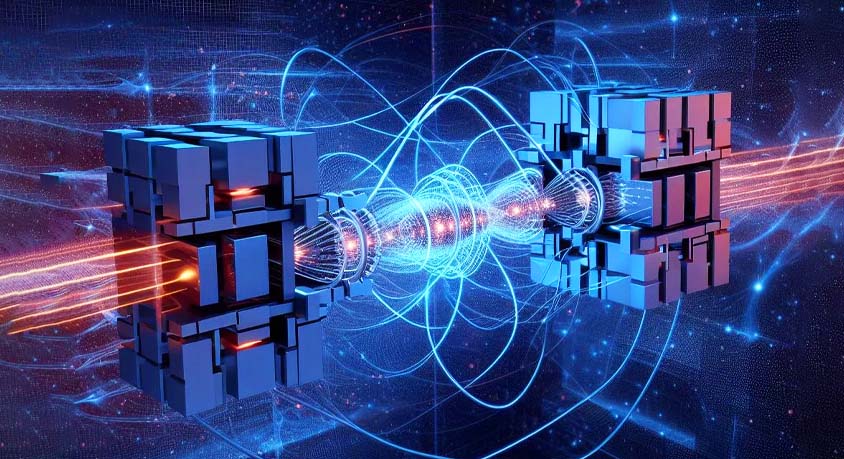
The engineering challenge is often described as holding a star in a magnetic bottle. The plasma is so hot that no physical material can contain it; it would vaporize any surface it touched. Instead, massive superconducting magnets create an invisible cage, twisting the charged particles into a helical path that never touches the walls. The magnets at ITER, when operational, will store enough energy to lift an aircraft carrier six feet out of the water. The cryoplant that cools them to superconducting temperatures is the largest helium refrigeration system ever built. The scale is staggering, and the complexity explains why fusion has remained thirty years away for sixty consecutive years.
Yet there is reason to believe this time is different. Private capital has entered the field with an urgency that government programs never mustered. Commonwealth Fusion Systems, spun out of MIT, demonstrated a record-breaking magnetic field with its high-temperature superconducting magnets and is constructing a demonstration plant called SPARC, aiming for net energy gain by 2027. TAE Technologies, backed by billions in private funding, is pursuing a different reactor design using hydrogen-boron fuel that eliminates radioactive tritium entirely. Helion Energy has signed power purchase agreements with Microsoft, promising electricity from a fusion plant by 2028. These companies are not waiting for ITER. They are building their own machines, on their own timelines, with their own capital.
The skeptics have valid points. No fusion experiment has yet produced more energy than it consumes, a threshold called scientific breakeven. The National Ignition Facility achieved ignition in 2022 and repeated it multiple times since, but its laser-based approach is inherently pulsed and unsuitable for continuous power generation. The magnetic confinement approach pursued by ITER and the private startups is designed for steady operation, but the engineering of the first wall, the tritium breeding blanket, and the heat extraction systems remains unproven at scale. Even optimistic timelines place the first commercial fusion plant in the 2030s, and grid-scale deployment in the 2040s. For the next two decades, the spinning meter will continue to spin.
But the direction of travel has shifted. When EAST holds 100-million-degree plasma for nearly eighteen minutes, it is demonstrating that the physics works. When private companies raise billions and sign power purchase agreements, they are demonstrating that the economics might work. And when thirty-five nations continue funding ITER despite its delays, they are demonstrating that the geopolitical will exists. The sun in a box is no longer a question of if, but when.
The implications for your electric bill are straightforward in concept, complex in execution. Electricity today is expensive because fuel is expensive, infrastructure is expensive, and the environmental costs of carbon are increasingly priced into the market. Fusion offers fuel that is effectively free, waste that is minimal, and a plant footprint that is modest. The capital cost of building the first plants will be astronomical, but the marginal cost of running them approaches zero. Over decades, as the technology matures and scales, the price of electricity could fall to levels that make current prices unrecognizable. Not zero, perhaps, but low enough that the calculation at 8 p.m. on a winter evening becomes irrelevant.
The deeper question is what happens to a civilization when energy becomes nearly free. Food production, desalination, manufacturing, transportation—all are constrained by energy costs. Remove that constraint, and the boundaries of possibility shift. The spinning meter measures more than kilowatt-hours. It measures the cost of existence in an industrial society. When that meter stops spinning, existence itself becomes cheaper. The sun in a box is not just a power plant. It is a key to a door we have been trying to open since the first caveman learned to control fire.
MORE FROM WIRED
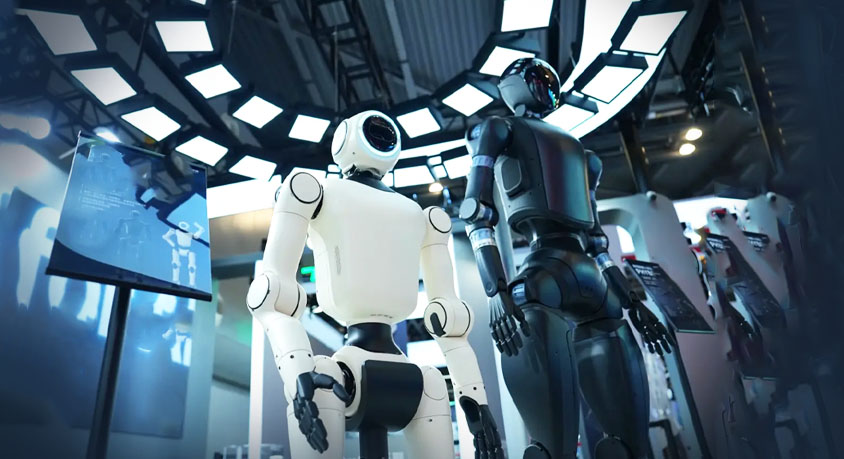
- It's no longer just the "it" that can chat: Artificial intelligence has finally grown hands and feet!

- Jurassic Park Warning? Scientists Just Made an Extinct 'Ghost' Open Its Eyes

- The Next Bet: Making the Blind See, and the Rest of Us Transparent?
- Apr,12,2026
- They Decided to Build a Nuclear Reactor in Their Own Backyard to Feed AI
- Apr,10,2026

- Your first household robot is finally coming!
- Apr,08,2026

- Apple's Crease Battle: Can This $2,000 Phone Save a Dull Era?
- Apr,06,2026
- "Eye Contact" in Autonomous Driving—When AI Cars Learn Human Intuition
- Apr,04,2026