
More Human Than You? The New Robot That Just Passed the "Creepy" Examination with Flying Colors
There is a moment, usually measured in milliseconds, when your brain registers that something is wrong. The face in front of you has the right proportions, the skin has the right texture, the eyes track your movement with mechanical precision. But somewhere in the ancient architecture of your cognition, a warning light flashes: not human. This is the uncanny valley, the visceral unease we feel when encountering something almost but not quite alive. For decades, it has been the barrier that humanoid robotics could not cross. The machines were too stiff, too glassy-eyed, too obviously mechanical. That barrier is now crumbling, not from the American companies that dominate headlines, but from laboratories in Europe and Asia that have been quietly building something stranger: robots that feel, for a brief moment, like us.
The most striking example stands in a laboratory in Cornwall, England. Ameca, built by Engineered Arts, is not designed for backflips or heavy lifting. It is designed for one thing only: being convincingly human in its expressions. The head turns toward you with a smoothness that mimics natural hesitation. The eyes widen slightly when surprised, narrow when curious. The mouth shapes words without the exaggerated puppet movements that plague other machines. When Ameca "wakes up" in company videos, it stretches, looks at its hands with apparent confusion, and makes eye contact with viewers in a way that triggers genuine social responses. The underlying technology combines multiple cameras for facial tracking, microphones for spatial hearing, and generative AI models that process conversation and select appropriate emotional responses from a library of micro-expressions. It cannot walk or carry objects. But when it looks at you, you feel seen.
On the other side of the world, Chinese company Unitree has taken a different approach. Its G1 humanoid, priced at a remarkably accessible $16,000, is built for movement rather than expression. Standing just over four feet tall, the G1 walks with a fluid gait, recovers from pushes, and performs tasks using articulated hands with three-fingered grips. The latest iteration, demonstrated in early 2026, shows the robot navigating uneven terrain, opening doors, and even dancing with a coordination that approaches human capability. Where Ameca captures the face, Unitree captures the body. And both are now being integrated with the large language models that give them something resembling thought.
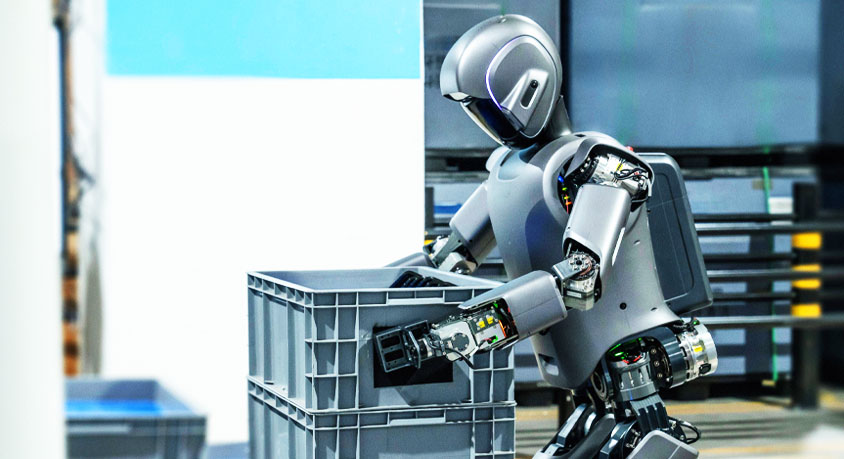
The convergence of these two capabilities—expressive faces and agile bodies—with the reasoning power of AI is what makes this moment different from previous robotics hype cycles. Ameca is now running versions of GPT and similar models, enabling conversations that go beyond scripted responses into genuine interaction. The robot can remember previous conversations, adjust its personality based on user preferences, and display appropriate emotional reactions to what it hears. In demonstrations, when told something sad, its face falls. When told a joke, it smiles. These are not programmed animations triggered by keywords; they are outputs from models trained on human interaction, choosing expressions the way a human might.
The implications for the "robot in every home" vision are profound. The barrier to household adoption has never been purely mechanical. Vacuum robots have roamed floors for decades. Dishwashers have cleaned dishes. The missing element has been trust—the willingness to share space with a machine that might knock over a child, misinterpret a command, or simply feel too alien to tolerate. A robot that can make eye contact, that responds to emotional cues, that remembers your name and preferences, begins to cross that barrier. It becomes less appliance, more presence.
Europe is pushing this vision with regulatory and cultural specificity. Engineered Arts emphasizes that Ameca is designed for public spaces first—airports, museums, hospitals—where its expressive capabilities can assist rather than replace. The UK's innovation agency has funded projects exploring robots for elderly care, where companionship is as important as physical assistance. The approach reflects a European sensibility: robots should augment human connection, not substitute for it. The machine that holds your grandmother's hand while reminding her to take medication is useful; the machine that pretends to be her grandson is not.
China's trajectory is different and revealing. Unitree's G1, like the more expensive H1 model, is explicitly positioned as a general-purpose platform for developers rather than a consumer product. The company has focused on lowering cost and improving mobility, aiming to put humanoid robots in factories and warehouses first, homes later. The national strategy, articulated in Beijing's five-year plans, treats robotics as industrial infrastructure—a tool for maintaining manufacturing competitiveness as the workforce ages. The robots coming out of China are workers first, companions second. The difference in priorities reflects deeper differences in how these societies imagine the future.
The technical challenges that remain are substantial. Battery life limits operation to a few hours. Complex manipulation—folding laundry, loading dishwashers—still confounds even the most advanced hands. Walking reliably on uneven terrain, climbing stairs, recovering from falls: these are solved in labs but not yet in homes. And the uncanny valley, while crossed in brief moments, still yawns when the illusion breaks. A robot that looks almost human but suddenly jerks or glitches is more disturbing than one that never tried to be human at all.
Yet the direction is unmistakable. The components are converging: expressive faces from Engineered Arts, agile bodies from Unitree, conversational AI from the language model companies, sensors and batteries improving on predictable curves. The question is no longer whether humanoid robots will enter homes, but when, and in what form, and from which country they will come. The American companies that dominate public imagination—Boston Dynamics with its athletic feats, Tesla with its manufacturing scale—are not the only players, and may not be the ones that finally succeed. The most human robot in the world right now is British. The most mobile is Chinese. The most affordable may be either, depending on when you ask.
The robot that passes the creepy examination does not do so by accident. It is designed, pixel by pixel, algorithm by algorithm, to trigger the ancient circuits in your brain that recognize another being. When it looks at you and smiles, you smile back. When it frowns, you feel a flicker of concern. You know it is a machine. Your body does not care. That dissociation—between what you know and what you feel—is the gateway to a world where machines are no longer tools but companions. Whether that world is welcoming or unsettling depends on what we build next, and why.
MORE FROM WIRED
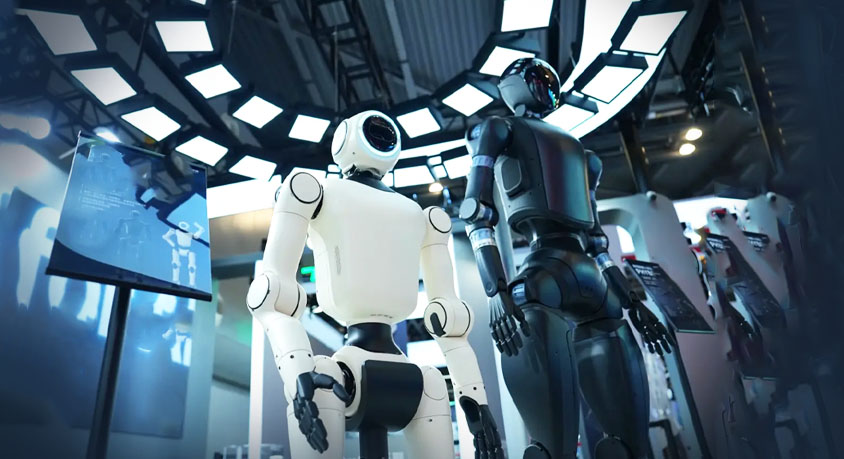
- It's no longer just the "it" that can chat: Artificial intelligence has finally grown hands and feet!

- Jurassic Park Warning? Scientists Just Made an Extinct 'Ghost' Open Its Eyes
- The Next Bet: Making the Blind See, and the Rest of Us Transparent?
- Apr,12,2026
- They Decided to Build a Nuclear Reactor in Their Own Backyard to Feed AI
- Apr,10,2026
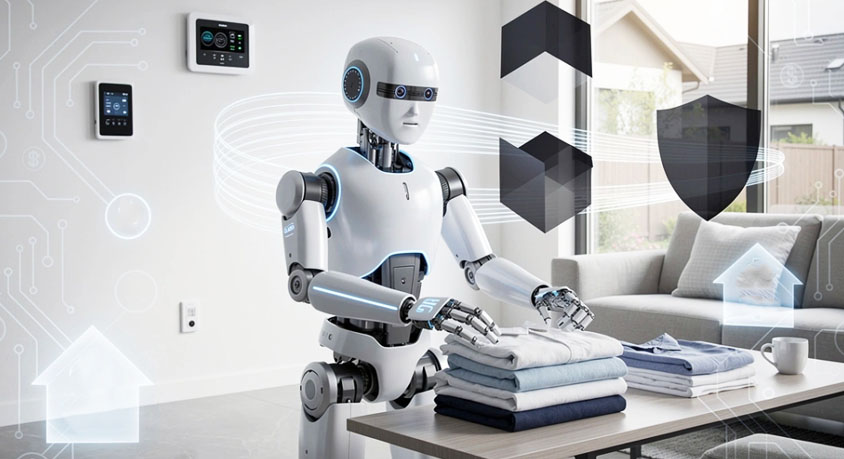
- Your first household robot is finally coming!
- Apr,08,2026
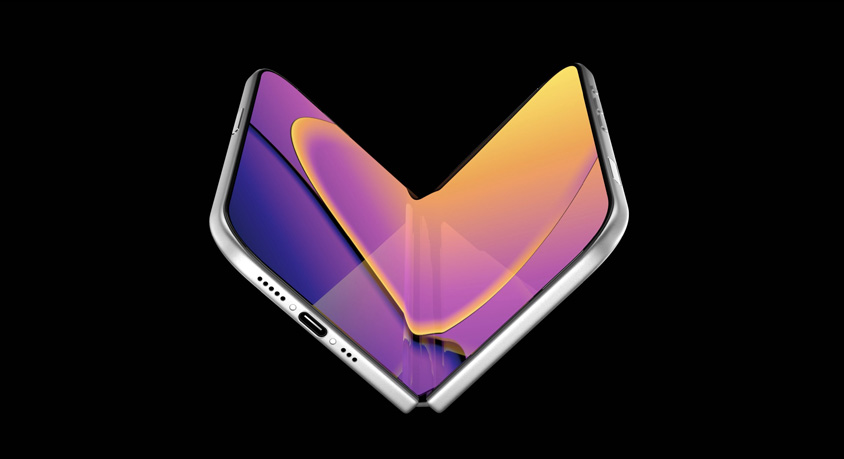
- Apple's Crease Battle: Can This $2,000 Phone Save a Dull Era?
- Apr,06,2026
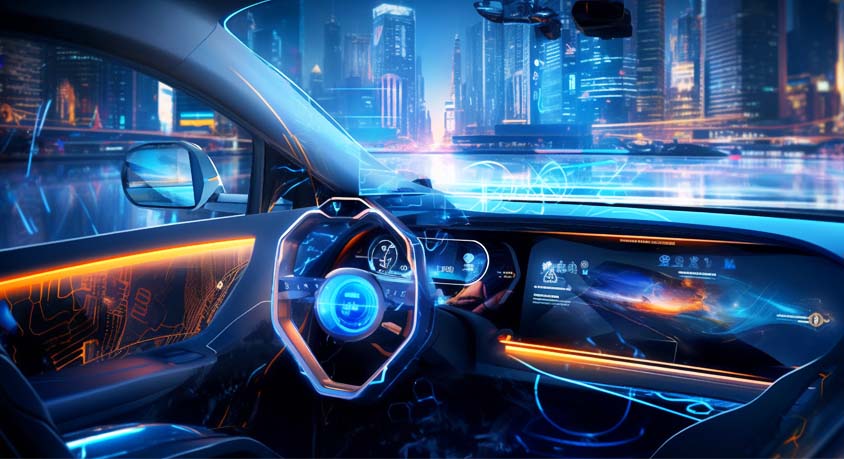
- "Eye Contact" in Autonomous Driving—When AI Cars Learn Human Intuition
- Apr,04,2026